

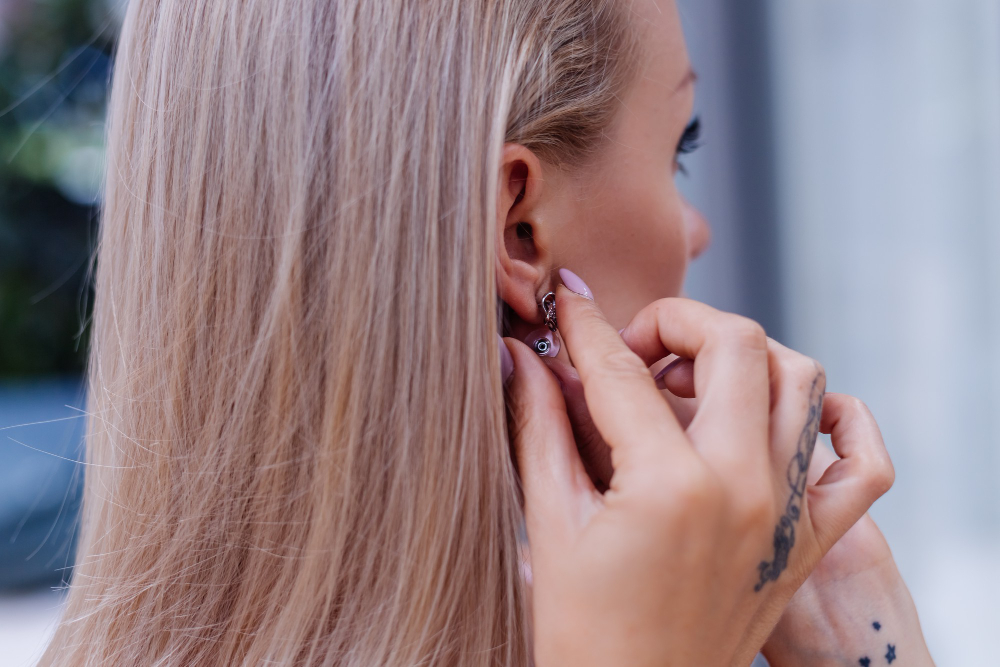
Ear piercing is a popular way to express your style. But it can result in an infection which may be due to some carelessness or bad hygiene. For a healing process to be safe and healthy, it is crucial to know how to recognise, treat, and avoid infections.
How Does Infection Occur in an Ear Piercing?
An ear piercing is a small wound that bacteria can infect. Ear piercings heal in 6-8 weeks whereas cartilage piercings take much more time to heal. An ear-piercing infection can have several contributing elements, including:
- Touching the piercing with dirty hands
- Ear piercing with nonsterile implements
- Wearing too-tight earrings that impair ventilation
- Twisting or handling the earrings too much
- Not using correct aftercare guidelines
- Choosing rough post earrings that aggravate the piercing site
Signs of an Infected Ear Piercing
Early recognition of the signs of an infected ear piercing is essential to avoid consequences. Look for these frequent indicators:
- Yellow, pus-like discharge
- Discomfort and Swelling
- Redness and inflammation
- Ongoing pain or discomfort
- The sensation of itching or burning
Ear Piercing Infection Treatment at Home
Should the infection be small, appropriate home treatment can help. Use these ideas to encourage recovery:
- Clean Your Hands: Always wash your hands before touching the piercing, to avoid contamination.
- Use of Saline Solution: Use sterile saline water along with distilled water to clean the affected portion of your ear. Apply this solution around the piercing twice a day.
- Don’t Remove Your Earring: Removing the earrings could cause the hole to seal, keeping the infection within.
- Completely Dry the Surface: You need to focus on drying your pierced surface with the help of tissue. It is a very delicate zone to treat well.
- Keep the Earring Loose: Make sure the earring back isn’t pressed tight against the skin, so air can reach the piercing.
- Continue Cleaning: Keep up the twice-daily cleaning schedule even after the infection clears, until the piercing heals entirely.
When to Seek Medical Help for the Ear Piercing?
While most cases of ear piercing infections may be controlled at home, some call for expert medical intervention. See a doctor whether:
- The infection gets worse even with household treatment.
- The earring is buried or caught in the skin.
- You develop a fever
- The redness and swelling extended beyond the piercing site.
How to Prevent an Ear Piercing Infection?
Treatment is never as good as prevention. Use these fundamental rules to help avoid infections:
- Choose a Professional Ear Piercing Service
- Confirm Sterilisation Procedures
- Follow Aftercare Instructions
- Avoid Excessive Handling
- Let Your Ear Piercing Heal Naturally
Conclusion
A simple and fashionable method to accessorise, ear piercings need to be properly cared for to avoid infection. You can guarantee safe and trouble-free Ear Piercing healing by identifying early warning signals. Take necessary aftercare measures and treat small infections at home. Always seek medical help if you think you may have a serious infection so that prompt action may be taken. Flinders Discount Chemist offers ear piercing services and can help with ear piercing aftercare questions.